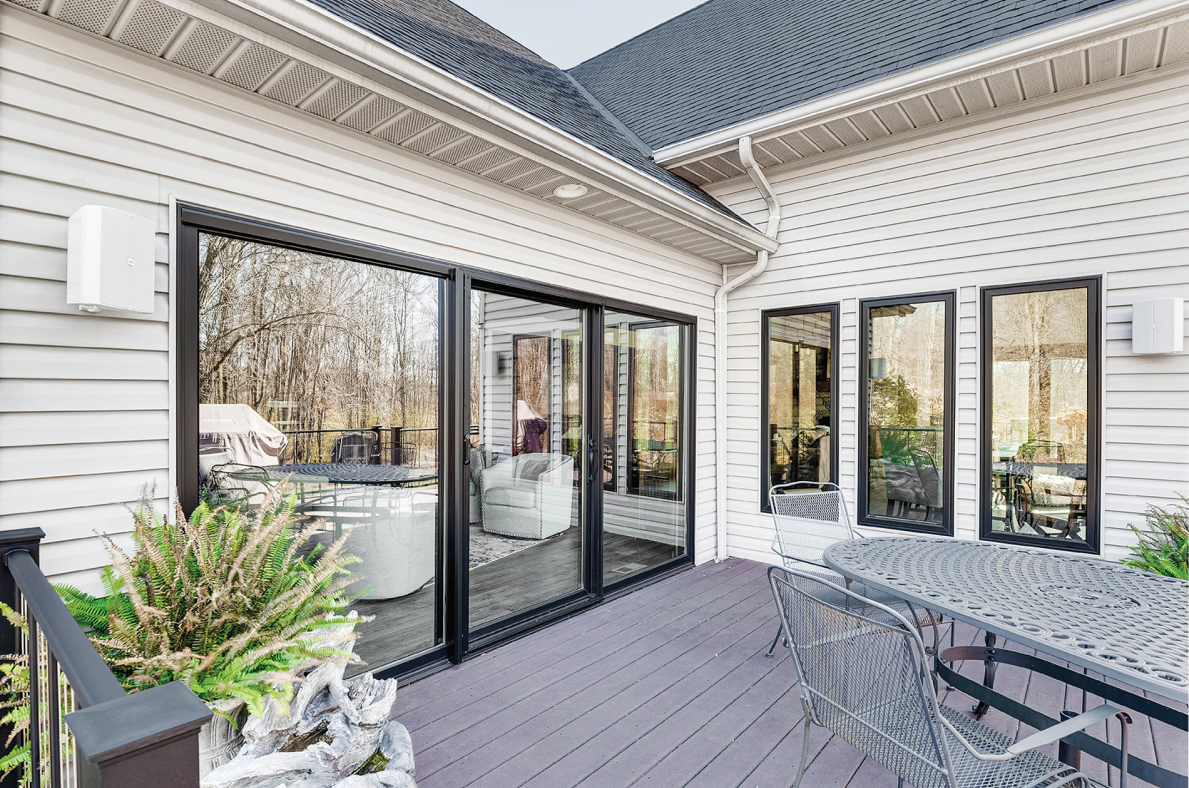
James Hardie siding for Clayton homes at the edge of Mount Diablo
Custom Exteriors replaces siding on Clayton homes with James Hardie fiber cement, a noncombustible siding built for homes that sit next to open grassland and oak woodland. Clayton is bordered by Mount Diablo State Park, open space, and Black Diamond Mines Regional Park, and much of the city is mapped as a Very High Fire Hazard Severity Zone. Our own full-time crews install James Hardie siding, not subcontractors, and it carries a 30-year non-prorated product warranty. We have served Clayton and Central Contra Costa County from our Pleasanton showroom since 1997, with 30,000+ completed projects.
Living next to open space in Clayton
Clayton's setting is the reason people move here, and it is also why siding matters more here than in most East Bay cities. Under the State Fire Marshal's 2025 maps, Clayton has 1,302 acres rated Very High, 359 rated High, and 215 rated Moderate. That means roughly half of Clayton's land area is mapped Very High.
The hills around Clayton have burned before. In September 2013, the Morgan Fire started off Morgan Territory Road southeast of Clayton and burned 3,111 acres on the slopes of Mount Diablo. About 100 homes in the surrounding area were evacuated, and the Clayton Community Library served as the evacuation center.
What that means for Clayton homeowners:
- Check your address. Enter it on the State Fire Marshal's Fire Hazard Severity Zone viewer to see your zone.
- Defensible space. Homes in Very High zones must maintain 100 feet of defensible space.
- Building standards. Clayton's municipal code adopts the 2025 California Wildland-Urban Interface Code as amended by the Contra Costa County Fire Protection District, which provides fire protection in Clayton. Whether those standards apply to a siding project depends on your zone and scope of work.
The map measures hazard, not your home's individual risk. Your home's exterior materials are one of the things you control.
Why James Hardie siding is noncombustible
James Hardie fiber cement siding does not burn. It is made mostly of cement, sand, and cellulose fibers. It is classified as noncombustible when tested to ASTM E136 and has a Class A flame spread rating when tested to ASTM E84. HardiePlank, HardiePanel, and HardieShingle siding have also been listed by the California State Fire Marshal for use in wildland-urban interface construction.
That matters because California's wildfire construction standards accept noncombustible material as a compliant exterior wall covering. Fiber cement meets that on its own, without special assemblies or treatments. Wood, hardboard, and plywood siding cannot.
Learn more about James Hardie siding
An ember-resistant exterior, from the ground up
Most homes that burn in a wildfire are ignited by wind-blown embers, not a wall of flame. Embers collect in corners, gaps, and openings, and ignite whatever burns nearby. Walk your home's exterior from the ground up with this checklist:
- The first 5 feet around the house. Bark mulch, wood piles, dry plants, and wooden fences touching the house are the first things embers ignite. Keep this zone noncombustible.
- The bottom of your siding. The lowest courses of siding sit closest to that zone and catch embers that land on the ground. Noncombustible James Hardie siding will not ignite there. Wood siding, especially if it is dry, cracked, or rotting, can.
- Corners and trim. Embers pile up in inside corners and against trim boards. HardieTrim boards replace wood trim with the same noncombustible fiber cement.
- Gaps and joints. Old siding that has shrunk, warped, or separated leaves gaps where embers can lodge. New siding, installed to manufacturer specifications with sealed joints, closes them.
- Windows. Heat can break single-pane or older glass and let embers inside. Dual-pane windows with tempered glass hold up better.
- Eaves and soffits. Open eaves trap rising heat and embers under the roofline. HardieSoffit panels box them in with noncombustible fiber cement.
- Vents and roof. Attic and crawlspace vents and the roof covering are the last links. Ask your roofer or a home hardening specialist about ember-resistant vents and a Class A roof.
Siding covers steps 2 through 4 and works with step 6. No siding is fireproof, but noncombustible siding removes the largest combustible surface on most homes.
Why Clayton homes are ready for new siding
Clayton's homes are newer than most in Central Contra Costa County, but many are now 30 to 50 years old and on their first siding. The median Clayton home was built in 1983. About 29% of homes went up in the 1970s and a third in the 1990s, much of it in planned neighborhoods built after the city incorporated in 1964.
At that age, original siding typically shows the same warning signs:
- Soft, swollen, or flaking boards, especially at the bottom courses and around sprinkler overspray.
- Paint that will not hold, on south- and west-facing walls exposed to Clayton's long, hot summers.
- Gaps at seams, corners, and trim where boards have shrunk or moved.
- Woodpecker and insect damage on homes that back onto open space.
When we remove old siding, we inspect the sheathing underneath and repair water damage before the new siding goes on. Many 1970s homes also have lead paint. We are EPA Lead-Safe RRP Certified and follow lead-safe work practices for homes built before 1978.
Siding styles for Clayton homes
James Hardie offers profiles that suit Clayton's ranch homes, two-story planned-neighborhood homes, and custom homes in the hills, all with the same noncombustible performance.
- HardiePlank lap siding for the classic horizontal look found on most Clayton homes.
- HardieShingle siding for a cedar shake look on gables and accents.
- HardiePanel vertical siding for a board and batten look on farmhouse-style updates.
- Hardie Artisan siding for a thicker profile and deeper shadow lines on custom homes.
ColorPlus Technology, James Hardie's factory-baked finish, holds color longer than paint applied on site and is backed by a 15-year limited finish warranty, which matters on walls that take full afternoon sun. Our East Bay siding color guide and full-size displays in our Pleasanton showroom help you choose.
Permits and HOAs in Clayton
Siding replacement in Clayton usually needs a building permit, and Custom Exteriors handles it for you. The City of Clayton handles preliminary zoning review, then Contra Costa County performs plan check, issues the building permit, and inspects the work.
Many Clayton neighborhoods have HOAs with architectural review for exterior colors and materials. Check with yours early. We provide product specifications and color samples for your application.
Replacing siding and windows together
If your windows are original to the house, replacing them with your siding usually gives you a better result. With the siding off, we can install new windows using the new construction method, so each opening is fully flashed and sealed. It also covers steps 2 through 5 of the checklist in one project.
Ask about tempered glass options for wildfire exposure. See our Clayton replacement windows page for the Infinity by Marvin fiberglass windows we install.
Why Clayton homeowners choose Custom Exteriors
Clayton homeowners hire us because they can verify who does the work and who stands behind it.
- Full-time employee installers, not subcontractors. The crew that installs your siding works for Custom Exteriors. Here is why that matters.
- Local since 1997. We have served Central Contra Costa County from Pleasanton for nearly three decades, with 30,000+ completed projects.
- Permits and inspections handled, including the City zoning review, the County permit, and any wildfire code requirements for your project.
- Third-party recognition. Diamond Certified and BBB Accredited. See our awards and reviews.
- Warranty coverage. James Hardie's product warranties plus our own product and labor warranty.
Frequently asked questions
Q: My home backs onto open space. Does siding really make a difference? A: Yes. Homes next to open grassland and brush are the most exposed to wind-blown embers, and siding is the largest exterior surface on most homes. Noncombustible James Hardie siding will not ignite or add fuel the way wood siding can. It works best as part of a complete approach that also covers eaves, vents, windows, and the 5 feet around the house.
Q: Is my Clayton home in a Very High fire hazard zone? A: Possibly. Clayton has 1,302 acres mapped Very High under the 2025 State Fire Marshal maps, roughly half the city's land area, plus High and Moderate areas. Check your address on the State Fire Marshal's Fire Hazard Severity Zone viewer.
Q: Is James Hardie siding fireproof? A: No siding is fireproof, but James Hardie siding is noncombustible. It is classified as noncombustible when tested to ASTM E136 and has a Class A flame spread rating under ASTM E84, so it will not ignite or add fuel to a fire.
Q: My house was built in the 1990s. Is it too new to need new siding? A: Not necessarily. Siding on a 1990s home is now 25 to 35 years old. If you see soft or swollen boards, paint that will not hold, or gaps at seams and corners, the siding is likely near the end of its life. We can inspect it during a free consultation and tell you honestly whether replacement makes sense yet.
Q: Do I need a permit to replace siding in Clayton? A: In most cases, yes. The City of Clayton handles preliminary zoning review, and Contra Costa County issues the building permit and inspects the work. Custom Exteriors manages both steps for you.
Q: Will fire-resistant siding lower my homeowners insurance? A: We cannot promise that, because insurers set their own pricing and discounts. Ask your insurer which home hardening measures it recognizes. We provide product documentation for the James Hardie siding we install if your insurer asks for it.
Q: How much does James Hardie siding cost in Clayton? A: Cost depends on the size of your home, how much old siding has to come off, the condition of the wall underneath, the profile and finish you choose, and how much trim and soffit is involved. Two-story homes and hillside lots typically cost more. See our siding pricing guide for the main factors. We provide free, itemized estimates so you know exactly what you are paying for.
Ready to replace the siding on your Clayton home?
Schedule a free, no-pressure consultation. We will walk your home's exterior with you, check for damage under the current siding, go through profiles, colors, and fire-resistant options, and give you an itemized estimate, with no obligation. Prefer to see the products first? Our Pleasanton showroom has full-size James Hardie displays.
Visit our Pleasanton showroom (2142 Rheem Drive, Suite E, Pleasanton, CA 94588) Phone: (925) 249-2280
Financing options
We offer 18 months with no payments and no interest if the balance is paid in full within the promotional period, or 4.99% financing on approved credit. Ask about options during your consultation.
See financing details
Nearby areas we also serve
Custom Exteriors also installs James Hardie siding in Concord, Walnut Creek, Pleasant Hill, and Danville, and serves nearby Martinez. See everything we offer in Clayton, or view our full service area list.
Local Showroom
Design Expert
Convenient Financing Options
Inspiration Gallery


